White glove moving services are built around a simple idea: treat every item as if it matters, because to the person who owns it, it does. That means slowing down where a standard move speeds up, documenting where others assume, and placing items where you want them instead of leaving them in the hallway. The result is a move that feels controlled from the first survey to the last box, and one in which valuable furniture, artwork, and delicate pieces arrive in the condition they left.
The phrase is used widely, but what matters is the process behind it. Behind the label, white glove movers follow a structured sequence that begins well before moving day and continues after the truck has left. They plan the route through your building, pack each category of item with the right materials, move pieces with trained hands and proper equipment, and set up your new space so it is ready to live in. Understanding this sequence helps you recognise genuine care and ask the right questions when comparing providers.
This guide follows the process in the order it happens: planning, packing, handling, transport, and placement. At each stage it explains what to expect and what good practice looks like. Whether you are considering white glove moving services for an entire household or only for a few valuable pieces, knowing how the work is done will help you judge what is worth paying for and what a high standard actually looks like on the ground.
Stage One: Planning Before Anything Is Touched
Good white glove movers begin with a detailed survey, either in person or by video call. They walk through each room, look at access routes, measure doorways and lifts, and note anything fragile, heavy, or valuable. The goal is to understand the job completely before a single box is packed.
The survey also shapes the quotation, and white glove moving services are priced on the basis of what is found rather than on a guess from a phone call. A written, itemised quotation sets out the team size, vehicle, packing materials, special handling, insurance, and any extra services. Because the plan is based on a real assessment, the price is far less likely to change on the day.
Inventory and Condition Notes
For valuable items, the team records the existing condition, often with photographs. This protects both sides: it guides how each piece will be handled and provides a clear reference if a question about damage arises later.
Access and Building Coordination
Most Dubai buildings have rules for moves, including permits, lift bookings, moving hours, and protection of common areas. A careful team coordinates these in advance, so nothing is discovered at the last minute. Villa communities may also require vehicle clearance or specific arrival times.
What the Survey Records
Volume and type of belongings, fragile and high-value items, access routes, lift and doorway sizes, parking and loading arrangements, and any building requirements.
What You Receive
A written plan and quotation, a clear timeline, confirmed building arrangements, and a point of contact who knows the details of your move.
Stage Two: Packing Each Item the Right Way
Packing is where care becomes visible. Instead of placing everything in the same type of box, a careful team packs each category according to its needs.
Furniture
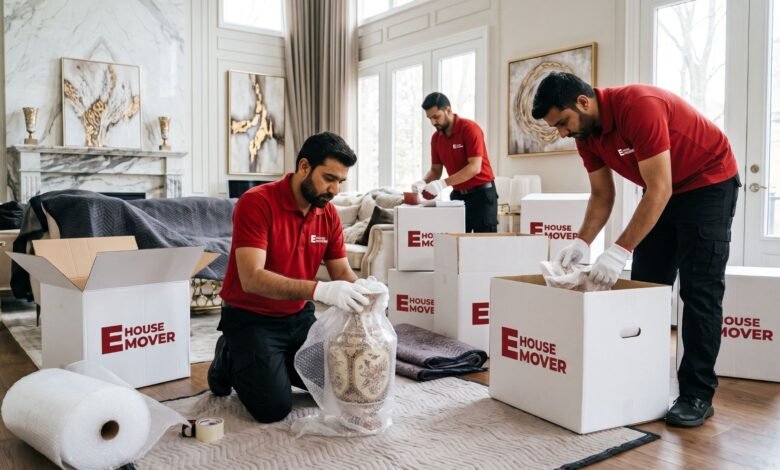
Every piece is covered before it is moved. Moving blankets protect surfaces, stretch wrap holds them in place, and corner guards protect edges. Large items such as beds, wardrobes, and dining tables are disassembled where appropriate, with screws and fittings bagged and labelled so reassembly is quick and complete.
Fragile Items
Glassware, ceramics, and ornaments are wrapped individually and packed in sturdy boxes with padding on all sides. Boxes are marked clearly and loaded so nothing heavy rests on top.
Artwork and Mirrors
Paintings, frames, and mirrors are protected with corner guards and padding, and often packed in dedicated boxes or crates. Surfaces are kept from direct contact with packing materials, and pieces are stored upright rather than flat.
Electronics
Televisions, computers, and audio equipment are packed in original packaging where possible, or with custom padding. Cables are labelled, and connections are photographed so everything can be reinstalled correctly.
Clothing and Soft Goods
Wardrobe boxes keep hanging clothes crease-free, and linens are packed in clean, sealed containers. This makes unpacking faster and keeps belongings fresh.
Stage Three: Careful Handling and Loading
Even the best packing can be undone by rough handling. Trained teams lift and carry with attention, use furniture dollies, straps, and padded equipment, and protect floors, doorways, and lifts along the route. Heavy and awkward items are handled by enough people to move them safely, and nothing is dragged across surfaces.
Loading follows a plan. Heavy items go in first and are secured against the walls, fragile pieces are placed where they cannot be crushed, and everything is strapped or braced so it does not shift during the journey. A well-loaded vehicle is one of the least visible but most important parts of a careful move.
Stage Four: Transport and Timing
Transport is the point of greatest risk, so a careful team treats it seriously. Vehicles should be clean, suitable for the load, and organised so valuable items are separated from heavy ones. Routes and timing are planned to reduce delays, and in hot weather the team takes care to limit the time items spend waiting in direct sun or an uncooled vehicle.
Communication matters too. You should know when the team is leaving, when it is expected to arrive, and who to contact if something changes. Clear updates reduce stress and help you prepare the new property for arrival.
Stage Five: Placement, Setup and Clean-Up
The job is not finished when the truck is unloaded. A careful team carries items to the correct rooms, places furniture where you want it, reassembles beds and tables, and positions heavier pieces so they do not damage floors. Boxes are placed in their labelled rooms, and, if requested, unpacked so you can start using the space straight away.
Packing materials are removed so you are not left with piles of cardboard and wrap. A final walkthrough with you confirms that everything has arrived, that placement is correct, and that any concerns can be addressed before the team leaves.
Insurance and Documentation
For valuable belongings, insurance is as important as handling. Ask what is covered, whether coverage is based on replacement value or a fixed limit, and how claims are made. High-value items may need to be declared in advance.
- Get the insurance terms in writing before you book
- Confirm coverage applies during packing, loading, transport, and unloading
- Keep receipts, valuations, or appraisals for important pieces
- Photograph valuable items before the move
- Check whether your own home insurance extends to items in transit
How to Prepare Your Home
You can help the process by preparing in advance. Declutter before the survey so you are only paying to move what you need. Clear access routes at both properties, confirm building requirements, and have a floor plan of the new home ready so furniture can be placed directly. Keep personal valuables, documents, and essentials with you.
Questions to Ask Before You Book
- Will you survey my belongings and provide a detailed written quotation
- How do you record the condition of valuable items
- What materials do you use for furniture, artwork, and fragile pieces
- Are your handlers permanent staff, and how are they trained
- How is insurance structured for high-value items
- Will you place, reassemble, and unpack as part of the service
- Can you provide references from customers with similar belongings
Conclusion
A careful move is the result of a careful process: a thorough survey and plan, packing matched to each type of item, trained handling and secure loading, controlled transport, and placement that leaves your new home ready to use. When each stage is done properly, valuable belongings arrive in the same condition they left, and the move feels organised rather than chaotic. Ask to see that process in action before you book, and you will know whether the care promised in words is the care you will actually receive.