Pre Nursery Schools Near Me – Helping Toddlers Take Their First Steps Toward Learning

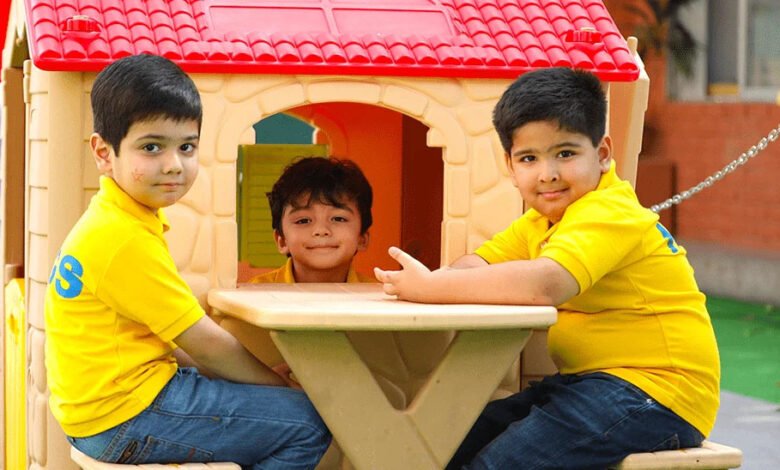
A toddler’s first educational experiences should feel like a natural extension of play. At this age, children learn by observing people, touching objects, experimenting with movement, and repeating familiar activities.
Parents searching for pre nursery schools near me often hope to find a gentle introduction to group learning that supports curiosity without placing unnecessary expectations on young children.
A thoughtful pre-nursery environment creates opportunities for exploration, communication, and growing independence while maintaining emotional comfort.
Understanding the Purpose of Pre-Nursery Education
Pre-nursery introduces young children to experiences beyond their immediate home environment.
It provides opportunities to interact with peers, explore new materials, and become familiar with simple daily routines.
Unlike later educational stages, pre-nursery should not focus heavily on formal academic performance.
Instead, it supports foundational abilities through meaningful experiences.
Why Toddlers Learn Through Exploration
Young children use their senses to understand the world.
They discover differences between objects by touching, comparing, moving, and observing.
These experiences contribute to cognitive development and coordination.
A supportive learning environment encourages experimentation while maintaining appropriate supervision.
Building Communication Skills Through Everyday Activities
Communication develops rapidly during the early years.
Children gradually learn to express preferences, understand instructions, and respond to familiar conversations.
Storytelling and Rhymes
Stories introduce new vocabulary and encourage listening.
Rhymes help children recognize sounds and develop language awareness.
Repeating familiar songs also strengthens memory and encourages participation.
Educators can support communication by responding patiently to children’s attempts to express themselves.
Supporting Physical Development
Toddlers need regular opportunities for movement.
Walking, balancing, climbing appropriate structures, and participating in movement games support gross motor development.
Activities involving smaller objects help strengthen hand coordination.
Fine Motor Learning Experiences
Stacking blocks, arranging shapes, and transferring objects between containers encourage precise movements.
These activities also introduce concentration and problem-solving.
Children should have sufficient time to repeat experiences without being rushed.
Encouraging Early Social Interaction
For some toddlers, pre-nursery provides their first regular opportunity to interact with children outside their family.
Social development takes time.
Children may initially play alongside one another before developing more cooperative interactions.
Understanding Parallel Play
Parallel play occurs when children play near each other without necessarily sharing the same activity.
This is a common developmental stage.
Educators can encourage gentle interaction without forcing children into group participation before they feel comfortable.
Over time, shared activities introduce cooperation and communication.
Helping Children Become More Independent
Toddlers often enjoy attempting everyday tasks independently.
Simple responsibilities can support this growing confidence.
Children may practice putting away materials, washing hands with assistance, or choosing between suitable activities.
These experiences encourage independence while teaching familiar routines.
Managing Separation Anxiety With Care
Starting pre-nursery may introduce unfamiliar emotions.
Some children feel excited, while others need additional reassurance.
A gradual transition, consistent routines, and supportive educators can help children adjust.
Parents should avoid comparing their child’s adjustment period with that of other children.
Choosing a Suitable Pre-Nursery Environment
When evaluating pre nursery schools near me, parents should observe how educators interact with toddlers.
Look for age-appropriate activities, safe movement spaces, opportunities for rest, and patient communication.
Families considering pre-nursery learning in Whitefield can discuss settling-in arrangements and daily care routines during a visit.
Questions Parents Can Ask
Ask how children are comforted, how developmental differences are supported, and how daily experiences are communicated.
These details provide useful insight into the quality of care and learning.
Conclusion
Pre-nursery education can create a positive foundation for future learning when it respects the natural pace of childhood.
Through sensory experiences, movement, communication, and supportive relationships, toddlers develop important abilities.
Choosing a nurturing environment helps children approach their first educational experiences with growing confidence and curiosity.